
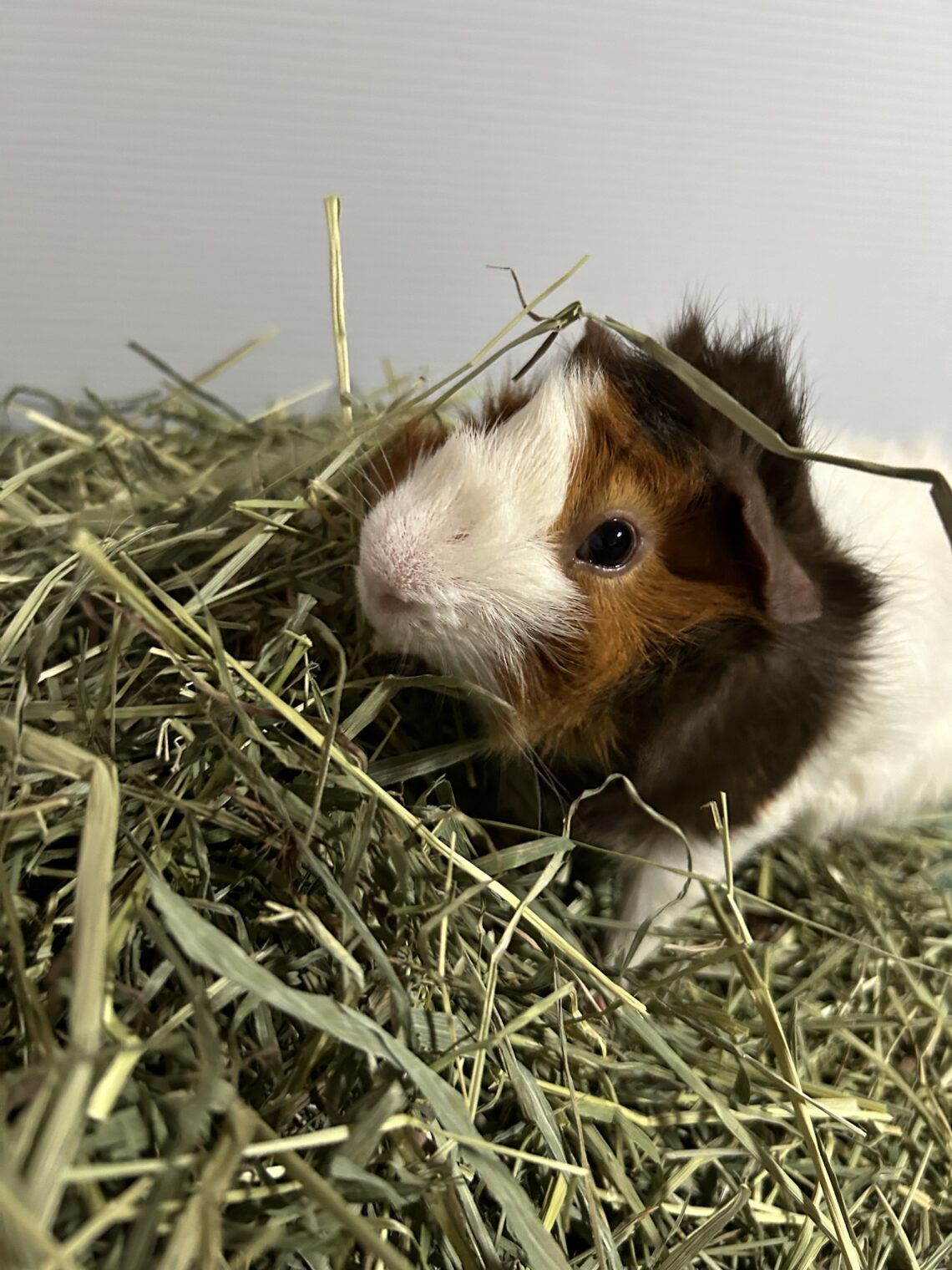

If you ask any experienced guinea pig owner what the number one essential is for their piggies, the answer will almost always be the same: hay, hay, and more hay! 🌿
But why is hay so important? And why do guinea pigs need it available all the time rather than just a daily handful? Let’s explore why unlimited hay is a cornerstone of guinea pig health and happiness.
1. Hay Keeps Their Digestive System Moving
Guinea pigs are herbivores with delicate digestive systems. Their gut is designed to process a constant flow of fibrous plant material. If they don’t have access to hay at all times, food can stop moving properly through their system — which can quickly become dangerous.
Hay provides the roughage needed to keep things moving and to maintain healthy gut bacteria. Think of it as the fuel their little bodies are constantly burning through.
2. Hay Maintains Healthy Teeth
Unlike us, guinea pigs’ teeth never stop growing. They need constant chewing to wear them down naturally. If teeth grow too long, they can cause pain, difficulty eating, and even injuries inside the mouth.
Crunching and grinding hay is one of the best natural ways to keep those teeth at the right length. Pellets or veggies alone just won’t do the job.
3. Hay Provides Mental Enrichment
Hay isn’t just food — it’s also entertainment! Guinea pigs love to forage, burrow, and build little nests in their hay piles. Giving them unlimited hay means they always have something to do, which helps prevent boredom and encourages natural behaviour.
4. Hay is Their Primary Food Source
It’s easy to think of pellets and veggies as the main meal, but really, they’re the side dish. For a healthy diet, guinea pigs should eat:
- 80–90% hay
- 5–10% fresh vegetables
- A small amount of fortified pellets
- Beneficial forage (dried herbs, safe leaves, and grasses) for added variety
Hay forms the foundation of their diet, while forage is a wonderful way to mimic natural grazing and keep things interesting.
5. The Right Type of Hay Matters
Not all hay is equal! The best hays for guinea pigs are:
- Timothy hay (a favourite staple, high in fibre)
- Meadow hay (a softer mix, great for variety)
- Orchard grass hay (good for piggies with allergies to timothy)
Avoid alfalfa hay for adult guinea pigs — it’s too rich in calcium and can lead to bladder stones. However, young guinea pigs under 6 months old, or pregnant/nursing sows, can benefit from some alfalfa alongside timothy.
6. How Much Hay Do They Really Eat?
The answer: a lot! A guinea pig can easily munch through a pile of hay as big as their body every single day. That’s why it’s vitally important that they always have access to plenty of fresh hay in their cage.
Hay should be topped up and replaced daily so it never runs out or goes stale. This ensures your guinea pigs are never without their most important food source.
Me, My Piggies & Hay
I personally give all of my piggies a big pile of hay in their designated hay spot (not that it stays there — as we piggie owners know, it migrates everywhere! 😂).
You are also going to have waste with hay, and though it can feel like money going into the bin, it’s really not. The way I look at it is that hay provides not only food for the piggies, but it’s also their enrichment, warmth, safety — and yes, also a toilet!
So even the “wasted” hay is still serving a purpose.
Final Thoughts
When it comes to guinea pig care, hay truly is the foundation of their wellbeing. It keeps their teeth healthy, their digestion running smoothly, and their minds happy.
If you ever feel unsure about your guinea pigs’ diet, just remember this simple rule: when in doubt, add more hay!
Gentle Reminder 🐾
I’m not a vet — just a fellow pet parent sharing my experiences and what I’ve learned along the way. If your rat shows signs of illness or distress, always seek professional veterinary advice.



No Comments